How To Choose A Family Friendly Hotel Room
A practical step-by-step guide to how to choose a family-friendly hotel room, including preparation, instructions, common issues, tips, and next steps.
How To Choose A Family Friendly Hotel Room
Choosing a family-friendly hotel room involves more than just a larger bed. You need to assess the room layout, safety features, noise levels, proximity to amenities, and the hotel's family policies to ensure a comfortable and stress-free stay for both parents and children. This guide walks you through each consideration step by step, from booking to arrival, offering practical checks and tips to help you make the best choice for your family's needs.
Fast Answer
- Look for a room that offers a separate sleeping area for parents and kids, such as a suite or adjoining rooms, to allow everyone quiet time and better sleep.
- Check the room's size and layout details on the hotel's website, then call to confirm cribs, blackout curtains, and any noise or safety concerns.
Before You Start
- List your must-have room features, such as a mini-fridge, microwave, bathtub, or balcony, and rank them by importance for your family's comfort.
- Decide on a budget for the room, keeping in mind that family suites or adjoining rooms often cost more than a standard double.
- Check the hotel's family policy on their website, including age definitions for children, extra bed charges, and whether cribs or rollaway beds are available.
- Read recent guest reviews focusing on families, noting comments about room size, noise, cleanliness, and how the staff handled requests.
Step-by-Step Instructions
Start with a Room Size and Layout Assessment
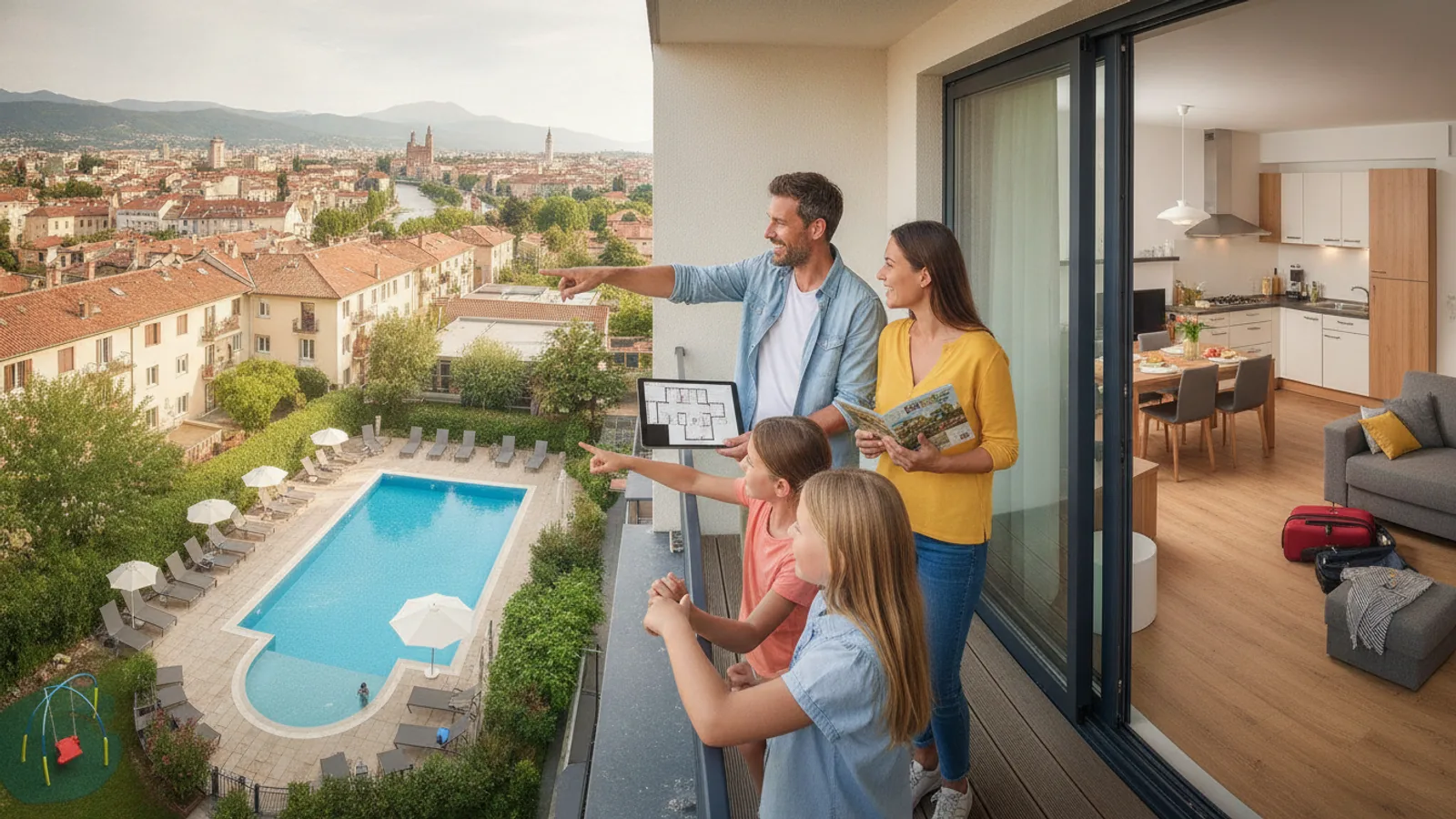
First, determine how much space your family truly needs. Measure the number of people and the ages of your children; a family of four may find a single room with two queen beds cramped, whereas two connecting rooms offer more comfort. Visit the hotel's website and look for the exact square footage or floor plan of the room type you're considering. Compare it with your own bedroom at home to visualize the size. Next, think about the layout: do you need a separate sleeping area for parents so you can stay up later without waking the kids? A suite with a door between the living and sleeping areas can be worth the extra cost. Also, consider the bathroom setup; a bathtub is essential for young children, while older kids may prefer a shower. Finally, read the room description carefully for features like a kitchenette or a pull-out sofa, which can add valuable space for sleep. If the size is not clearly stated, call the front desk and ask directly for the dimensions in feet or meters, and don't rely on photos which can be distorting. This initial assessment sets the foundation for all other decisions because a room that is too small will cause friction regardless of other amenities.
Evaluate Safety Features for Children
Family-friendly means safe, so inspect the room for potential hazards. Before booking, ask the hotel if they provide safety essentials like outlet covers, cabinet locks, and window guards. Once you arrive, do a quick sweep: check that windows have secure locks and cannot open wide enough for a child to climb through, that balcony doors have a latch out of reach, and that any glass tables or sharp corners are not in the walkway. Look for smoke detectors and carbon monoxide detectors; if they are absent, request a portable one or choose another room. Also, check the flooring; hard floors can be slip hazards for toddlers, so if possible, request a room with carpet or bring non-slip socks. Furniture stability matters: pull on dressers and bookshelves to ensure they are anchored to the wall, because a top-heavy piece can tip over. Examine the bathroom for a non-slip bath mat and a hand-held showerhead for bathing little ones. Finally, ensure the door has a deadbolt and a peephole that is low enough for an adult, and consider bringing a portable door alarm for extra peace of mind. These checks are vital because a single overlooked hazard can turn a happy vacation into an emergency room visit.
Check Noise Levels and Location
The room's location within the hotel significantly affects your family's sleep quality. Request a room on a higher floor, away from the lobby, bar, pool, and any construction areas. Avoid rooms at the end of hallways near stairwells or elevators, as these are high-traffic spots. Also, consider the room's orientation; a room facing a busy street or the hotel's air conditioning units will be noisier than one facing a quiet courtyard. When you arrive, walk around the hallways to see if there are any obvious noise sources, like a meeting room or a kids' play area that might be active late. Ask the front desk about their policy on quiet hours and whether they provide white noise machines or earplugs. Many hotels have rooms with double-glazed windows or soundproofing, so specifically ask if the room you are booking is soundproofed. Also, think about the convenience of the location: being close to the elevator can save steps with a stroller, but that comes at the cost of noise. Strike a balance by choosing a room that is a few doors down from the elevator rather than right next to it. This step matters because a good night's sleep is the cornerstone of a pleasant family trip; without it, everyone will be cranky and exhausted.
Confirm Family-Friendly Amenities
Beyond the bed and bath, look for amenities that make life easier. Ask if the hotel provides a mini-fridge and a microwave; these are essential for storing and heating formula, snacks, and leftovers. A refrigerator with a freezer is a plus for ice packs or frozen treats. Check if there is a coffee maker that doubles as a kettle for hot water; you can use it to sterilize bottles or make oatmeal. Also, ask about free cribs or playpens that meet current safety standards; if they provide one, inspect it for proper assembly and no missing parts. A blackout curtain is crucial for nap times and early sunrises; confirm that the room has them or request portable ones. If your child still uses a bathtub, verify that the room has a tub, not just a shower, and that the water temperature is safe. High-speed internet is not a luxury but a necessity for streaming children's shows or video calling home; check the connection speed and whether it is free. Some hotels offer children's activity packs, baby toiletries, or step stools on request—ask in advance. These extras might seem small, but they reduce the number of items you need to pack and can turn a mediocre stay into a relaxed one.
Review the Hotel's Family Policies
Every hotel has its own rules regarding children, and understanding them ahead of time prevents surprises. Ask about the maximum occupancy per room; some rooms are not allowed to exceed a set number, even with a crib. Check the age policy for children: some hotels define a child as under 12 and offer discounts, while others charge extra for older kids. Inquire about additional bed fees, whether for a rollaway bed or a sofa bed, and whether these fees include breakfast. Also, ask about the policy for early check-in and late check-out; with kids, you might want to arrive early to settle in, so request a time and see if they can guarantee it. Find out if the hotel has a pool, and its hours; some pools have adult-only times or require reservations. Ask about the breakfast hours and what food is available for children; a buffet with healthy options is a big win. Also, ask about laundry facilities on site, as kids spill and dirty clothes quickly. Knowing these policies helps you budget accurately and avoids arguments at the front desk when you arrive tired with excited children.
Book With Confidence and Confirm Details
Once you have gathered all the information, proceed to book, but do not settle for a simple confirmation email. Call the hotel directly after booking, and speak to the front desk, not a reservation line, to confirm every detail: the room type, the location, the amenities you discussed, and any special requests. Give them a heads-up that you are traveling with children; they might upgrade you or add a welcome amenity. Repeat the key requirements: crib, mini-fridge, microwave, blackout curtains, and a quiet floor. Ask them to put a note on your reservation so that your preferences are visible to the staff on arrival. If you booked through a third-party site, ask the hotel to verify they have received the booking and the details are correct. On the day of arrival, before you check in, take a moment to walk around the common areas and observe the noise levels; if something seems off, ask to change rooms immediately. This final step ensures that all your preparation pays off and that you are not disappointed when you open the door to your room.
Quick Reference
| Situation | Action | Why it helps |
|---|---|---|
| You are booking a room and see 'cozy' or 'compact' in the description. | Immediately search for the room's square footage on the hotel's website or call to ask for the exact dimensions in feet or meters. | These terms often mean the room is less than 200 square feet, which is too small for a family with children to coexist comfortably. |
| You arrive at the hotel and realize the room is on the same floor as the bar and the pool. | Politely ask the front desk to move you to a quieter floor, ideally a few floors above any entertainment venues. | Bars and pools generate noise late into the evening; a higher floor away from these areas will greatly improve your family's sleep. |
| You are traveling with a toddler and are unsure if the hotel's crib meets safety standards. | Specifically ask the hotel if their cribs are JPMA-certified and if they are inspected regularly; if they cannot guarantee it, bring your own portable crib. | A crib that does not meet current safety regulations might have gaps, loose parts, or sharp edges, putting your child at risk. |
Common Issues
- The room is much smaller than it appeared in the photos on the booking site.: Do not rely on photos; always check the square footage in the room details and read reviews that mention room size. If you have already booked and the room is too small, speak to the front desk immediately and ask if an upgrade or a larger room is available.
- The room is very noisy due to traffic from adjacent guests or the hotel's mechanical systems.: Ask to be moved to a quieter room, preferably one on a higher floor and away from elevators, stairwells, and the lobby. If no move is possible, request a white noise machine or use a fan or app to mask the sound, and ask for earplugs for adults and older children.
- You requested a crib or a rollaway bed at booking, but it is not in the room when you check in.: Contact housekeeping immediately and remind them of your request. If they do not deliver it promptly, follow up with the front desk. To avoid this, call the hotel the day before arrival to reconfirm all special requests and ask that they be noted on your reservation.
Advanced Tips
- Look for hotels that offer 'family rooms' that are specifically designed with a partition wall, giving both parents and kids separate areas without the cost of a suite.
- Check if the hotel provides a luggage storage service; on the day of early arrival or late departure, you can leave your bags and enjoy the pool or nearby attractions without dragging everything along.
- If you have more than one child, ask for the room number in advance and use a mobile app to check the floor plan, so you can choose a room away from the hotel's function rooms that might host events at night.
Final Checklist
- Confirm that the room has at least two separate sleeping areas, either a suite layout, adjoining rooms, or a sizable alcove with a door.
- Verify the presence of essential amenities: a mini-fridge, a microwave, a coffee maker, blackout curtains, and a bathtub or a step-in shower with a hand-held spray.
- Ensure the room is on a high floor, away from noise sources like the elevator, ice machine, bar, and pool, and ask specifically for a quiet location.
- Re-read the hotel's family policy to confirm the maximum occupancy, the free age limit for children, and any charges for extra beds, so there are no surprises at check-in.
FAQ
What is the difference between a family suite and adjoining rooms?
A family suite is a single room with a separate living area and a bedroom, often with a door between them. Adjoining rooms are two separate rooms connected by a door, which gives you two full bathrooms and more closet space. Suites may have a kitchenette, but adjoining rooms often offer more flexibility, allowing children to have their own room while parents have privacy. Which you choose depends on your needs: suites are easier for keeping an eye on young kids, while adjoining rooms are better for older children or if you want extra bathroom space.
How can I find out the actual square footage of a hotel room before booking?
Many hotel websites list the square footage in the room description; if not, you can call the hotel's front desk and ask directly. Alternatively, you can look for the information on online travel agencies or hotel review sites, but the most reliable method is to contact the hotel. When you call, ask for the exact dimensions in feet or meters, and also ask if the room has a balcony or any alcoves, which can affect usable space. This information is crucial for planning sleeping arrangements for your family.
What are the most important safety checks to do in a hotel room with a toddler?
First, check that all windows have secure locks and cannot be opened wide enough for a child to fall out. Second, look for exposed electrical outlets; cover them with child-proof caps or ask the hotel for outlet covers. Third, inspect the furniture, especially dressers and TVs, to ensure they are anchored to the wall so they cannot tip over. Fourth, check that the bathroom has a non-slip mat and that the hot water temperature is not too high; you can test the tap. Finally, ensure that any cords from blinds or lamps are out of reach to prevent strangulation. Always give the room a quick sweep upon arrival, and if you notice any hazards, request a different room or ask the hotel to fix them immediately.